Hey there, and welcome to the Humidifier Go blog! As a Senior Consultant here, I’ve spent years helping people transform their homes from dry, stuffy spaces into havens of fresh, breathable air. One of the most common points of confusion I see when people are shopping for a new unit is the spec sheet. You see numbers, features, and one term that always stands out: gallon capacity. So, What Does Gallon Capacity Mean For A Humidifier? You might think a bigger number is always better, but the answer is a bit more nuanced—and getting it right is the key to unlocking perfect indoor air quality.
I’ll never forget the first winter in my new apartment. I was waking up every morning with a scratchy throat, my skin felt tight, and I was getting zapped by static electricity every time I touched a doorknob. The culprit? Bone-dry indoor air, thanks to the central heating running full blast. That’s when I dove headfirst into the world of humidifiers, and I want to share that expertise with you. Let’s demystify gallon capacity together so you can choose a device that truly works for your life and your space.
First Off, Why Do You Even Need a Humidifier?
Before we dive into the technical specs, let’s quickly touch on why this matters. Battling dry air isn’t just about comfort; it’s about your health and home. When the humidity in your home drops below the ideal 40-60% range, you open the door to a host of problems.
A quality humidifier is your first line of defense, offering benefits like:
- Soothing Your Airways: Properly humidified air can help relieve congestion, soothe sore throats, and reduce the severity of coughs and sinus irritation.
- Healthier Skin and Hair: Say goodbye to dry, itchy skin and brittle hair. Optimal humidity helps your body retain its natural moisture.
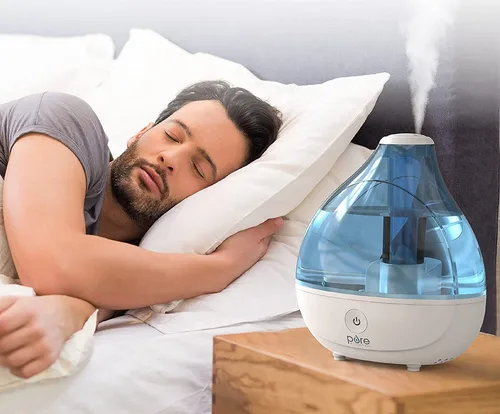
- Improved Sleep Quality: By reducing snoring (which can be caused by a dry throat) and preventing you from waking up feeling parched, a humidifier can lead to a more restful night’s sleep.
- Protecting Your Home: Dry air can wreak havoc on wood furniture, floors, and even musical instruments, causing them to crack and warp over time.
- Reducing the Spread of Viruses: Some studies suggest that airborne viruses, like the flu, don’t travel as easily in properly humidified air.
As Dr. Eleanor Vance, an acclaimed allergist, often tells her patients, “Maintaining proper indoor humidity between 40-60% is one of the simplest yet most effective ways to create a first line of defense against airborne allergens and viruses.”
So, What Does Gallon Capacity Mean for a Humidifier?
Alright, let’s get to the heart of the matter. When you see “1-gallon capacity” on a humidifier’s box, it’s telling you one simple thing: the size of the water tank. That’s it. It means the tank can hold up to one gallon of water.
This is where most people get tripped up. They assume gallon capacity is a measure of power or how large of a room the unit can handle. This is a common misconception.
Think of it like the gas tank in your car. A car with a 20-gallon tank isn’t necessarily faster or more powerful than a car with a 15-gallon tank. It just means you can drive it for a longer period before you have to stop and refuel.
The same principle applies here. Gallon capacity is primarily an indicator of runtime. A humidifier with a larger tank will be able to run continuously for more hours (or even days) before you need to refill it.
Gallon Capacity vs. Mist Output: The Real Power Metric
If capacity is about runtime, what determines a humidifier’s effectiveness for your room size? That would be its mist output, often measured in Gallons Per Day (GPD). Mist output is the amount of moisture the humidifier can actually release into the air over a 24-hour period.
Here’s how they work together:
- High Capacity, Low Output: A 2-gallon humidifier set to its lowest mist setting might run for 48-72 hours straight. This is great for someone who wants to “set it and forget it” for a few days in a small bedroom.
- Low Capacity, High Output: A 0.5-gallon humidifier on its highest setting might empty its tank in just 8-10 hours. This might be perfect for quickly adding moisture to a small office during the workday.
Understanding the relationship between these two factors is crucial. Don’t just buy the biggest tank you can find; consider how its output matches your needs and how often you’re willing to refill it.
Bảng trống.Matching Your Humidifier to Your Room Size
Now, let’s get practical. How do you choose the right combination of capacity and output for your space? Here’s a general guide we use at Humidifier Go to help our customers.
- Small Rooms (up to 300 sq. ft.): Think bedrooms, nurseries, or a home office.
- Recommended Capacity: 0.5 to 1 gallon.
- Why: These are often called “tabletop” or “personal” humidifiers. Their smaller tanks are easy to carry and refill in a bathroom sink, and their output is perfect for a contained space without causing condensation on windows. Check out [our guide to the best humidifiers for bedrooms]() for specific models.
- Medium Rooms (300 to 500 sq. ft.): This covers most living rooms, dining rooms, or larger master bedrooms.
- Recommended Capacity: 1 to 1.5 gallons.
- Why: A unit this size offers a great balance. The tank is large enough that you likely won’t have to refill it more than once a day, even on a medium or high setting. It has enough power to effectively raise the humidity in the entire area.
- Large Rooms & Open-Concept Spaces (500+ sq. ft.): This includes open-plan living areas, basements, or multiple connected rooms.
- Recommended Capacity: 2 gallons or more.
- Why: These “console” or “whole-house” humidifiers are designed for maximum runtime and output. They can effectively manage the air quality in a large area, but be prepared—they are larger, less portable, and often require refilling with a pitcher or hose.
Getting the Most Out of Your Humidifier: Use & Maintenance
Choosing the right unit is only half the battle. To ensure your humidifier runs efficiently and safely, proper maintenance is non-negotiable. Trust me, I’ve seen the consequences of neglected humidifiers—they can become breeding grounds for mold and bacteria.
How often should I clean my humidifier?
You should clean your humidifier at least once a week, and more often if you have hard water or notice any film or buildup. A dirty humidifier can disperse mineral dust and microorganisms into the air you breathe, defeating its purpose entirely.
The U.S. Environmental Protection Agency (EPA) recommends a regular cleaning schedule to ensure safe operation. Here’s a simple, effective routine:
- Unplug and Disassemble: Always disconnect the unit from power first. Empty the tank and base of any remaining water.
- Clean with Vinegar: Fill the tank with a solution of one part white vinegar to two parts water. Let it sit for at least 30-60 minutes to dissolve mineral buildup (scale). Use a small brush to gently scrub any stubborn spots.
- Rinse Thoroughly: Pour out the vinegar solution and rinse all parts with clean water until the vinegar smell is gone. You don’t want your room smelling like a salad!
- Disinfect (Optional but Recommended): For a deeper clean, you can use a solution of one teaspoon of bleach in a gallon of water. Swish it around the tank, let it sit for 10-15 minutes, and then rinse extremely well until you can no longer smell any bleach.
- Dry and Reassemble: Let all the parts air dry completely before putting the humidifier back together.
What kind of water is best for a humidifier?
The best choice is distilled or demineralized water. This is especially important if you own an ultrasonic humidifier. Tap water contains minerals that, in an ultrasonic unit, can be turned into a fine “white dust” that settles on your furniture. While generally not harmful, it can be a nuisance. Evaporative humidifiers are less prone to this, as their wicking filters trap most of the minerals.
Frequently Asked Questions (FAQ)
1. Can a humidifier be too big for a room?
Yes, absolutely. Using a humidifier with an output that’s too high for your space can raise the humidity above 60%. This can lead to condensation on walls and windows, creating a damp environment that encourages the growth of mold, mildew, and dust mites. It’s best to use a unit with an adjustable mist level or a built-in hygrometer that shuts it off automatically.
2. Does a larger gallon capacity mean the humidifier uses more electricity?
No, not directly. Electricity usage is determined by the humidifier’s technology (e.g., warm mist units with heating elements use more) and the mist output setting you choose. The tank size itself has no impact on power consumption.
3. How long will a 1-gallon humidifier run?
It depends entirely on the mist setting. On a low setting, it could run for over 24 hours. On the highest setting, it might last only 8-12 hours. The product’s packaging or manual usually provides an estimated runtime for different settings.
4. Where is the best place to put my humidifier?
Place it on a flat, water-resistant surface at least two feet off the ground. This allows the mist to disperse evenly into the air rather than settling on the floor. Keep it several feet away from walls, furniture (especially wood), and electronics.
5. What is the ideal humidity level for a home?
The ideal indoor humidity level is between 40% and 60%. Many modern humidifiers come with a built-in hygrometer to measure this, but you can also purchase an inexpensive one separately to monitor your home’s air quality.
The Takeaway: It’s All About Balance
So, let’s circle back to our original question: what does gallon capacity mean for a humidifier? It means convenience. It’s your measure of runtime—how long you can go before needing a refill. It is not a direct measure of power or room coverage.
The key is to find the right balance between tank capacity, mist output, and your room size. By doing so, you’re not just buying a home appliance; you’re investing in better sleep, healthier skin, and a more comfortable living environment. Now that you’re armed with this knowledge, you can shop with confidence and find the perfect partner in your journey toward better air.