Feeling like you’re living in a desert, even in the middle of winter? That tell-tale scratchy throat, dry skin, and constant static shock are all signs that the air in your home is gasping for moisture. For those of us with open-plan living areas, spacious master bedrooms, or great rooms, a standard-size unit just won’t cut it. Finding the best humidifier for large rooms is not just about comfort; it’s a crucial step toward creating a healthier, more pleasant indoor environment. This is where a larger, more powerful appliance becomes your home’s best friend, tackling the vast expanse of dry air and transforming your space into a sanctuary of balanced humidity.
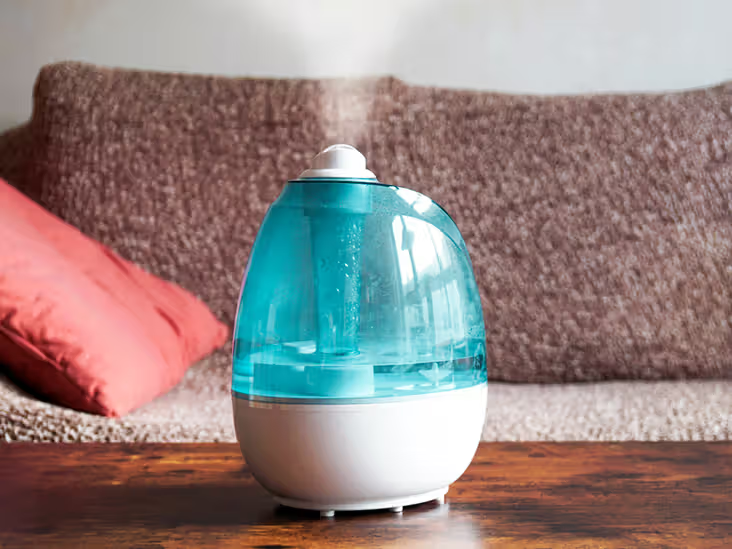
Why Your Large Room is Crying Out for a Humidifier
Let’s be real, “dry air” sounds like a minor inconvenience, but its effects are anything but. Think of your home’s air like a sponge. When it’s dry, it tries to soak up moisture from wherever it can find it—your skin, your sinuses, your wooden furniture, and even your houseplants. I used to wake up every winter morning feeling like I’d swallowed a fistful of sand until I invested in a proper large-room unit. The difference was night and day. For shop curated home air on this site.
Here’s a quick rundown of the benefits:
- Breathe Easier, Sleep Deeper: Ideal humidity levels (between 40-60%) help soothe irritated nasal passages, reducing congestion and coughing. This can be a game-changer for allergy sufferers and lead to more restful sleep.
- Healthier Skin and Hair: Say goodbye to chapped lips, dry hands, and brittle hair. Proper humidity helps your skin and hair retain their natural moisture.
- Protect Your Home & Furnishings: Dry air can wreak havoc on wood floors, furniture, and musical instruments, causing them to crack and warp over time. A humidifier helps preserve your valuable investments.
- Reduce Static Electricity: Tired of getting zapped every time you touch a doorknob? Increasing the moisture in the air is a simple and effective fix.
- A Happier Indoor Garden: Your tropical plants will thank you! Most houseplants thrive in a more humid environment, rewarding you with lusher, more vibrant foliage.
The Main Players: Types of Humidifiers Explained
When you start your search for the best humidifier for large rooms, you’ll quickly notice a few key technologies. Each has its own pros and cons, and the right choice often comes down to personal preference and your specific needs.
| Feature | Ultrasonic Humidifier | Evaporative Humidifier |
|---|---|---|
| How it Works | Uses high-frequency vibrations to break down water into a fine, cool mist. | A fan blows air through a saturated wick filter, causing water to evaporate naturally. |
| Noise Level | Very quiet, often near-silent. Ideal for bedrooms and offices. | Can be noisier due to the internal fan, similar to a small air purifier. |
| Mist Type | Produces a visible cool mist. | Produces an invisible, clean moisture. |
| Mineral Dust | Can release fine white mineral dust if using hard tap water. | The wick filter traps most minerals, preventing white dust. |
| Maintenance | Requires regular, thorough cleaning to prevent microbial growth in the tank. | Wick filters need to be replaced periodically (every 1-3 months). |
Ultrasonic Humidifiers
Bảng trống.Think of these as the silent ninjas of the humidifier world. They use a ceramic diaphragm vibrating at an ultrasonic frequency to create a super-fine mist. They’re incredibly quiet, making them perfect for light sleepers. However, it’s crucial to use distilled or demineralized water with them to avoid the “white dust” phenomenon—which is just mineral residue from tap water settling on your furniture.
Evaporative Humidifiers
These are the workhorses. They use a fan to draw in dry air and pass it through a moist wick filter. The air absorbs the moisture and is then released back into the room. It’s a very natural and self-regulating process; as the room’s humidity increases, the evaporation rate slows down. While the fan creates some white noise, they are excellent at humidifying very large spaces efficiently and without producing white dust.
How to Choose the Best Humidifier for Large Rooms
Navigating the options can feel overwhelming, but don’t worry. We’re here to break it down. Focusing on a few key factors will help you pinpoint the perfect model for your home.
Size and Capacity: The Golden Rule
This is the most critical factor. A humidifier’s capacity is measured in how many gallons of water it can disperse in 24 hours (output) and the size of its water tank. For a large room (typically over 500 square feet), you should look for a unit with a large tank (at least 1.5 gallons) and a high output rating. A larger tank means fewer refills, which is a huge convenience.
Key Features That Make a Difference
- Built-in Humidistat: An absolute must-have. This feature measures the current humidity in the room and automatically turns the unit on or off to maintain your desired level. It prevents over-humidification, which can lead to condensation and mold growth.
- Adjustable Mist Levels: Gives you control over the output, allowing you to ramp it up when the air is particularly dry or dial it back as conditions improve.
- Timer and Auto-Shutoff: A timer lets you set operating hours, while the auto-shutoff feature turns the unit off when the water tank is empty, which is a crucial safety feature.
- Ease of Cleaning: Look for models with large tank openings and fewer hard-to-reach parts. A humidifier is only as good as it is clean.
As a Senior Consultant at Humidifier Go, I always tell people: “The best humidifier is one you’ll actually use and clean regularly. Don’t be swayed by a dozen flashy features if the basic maintenance is a chore.”
Cool Mist vs. Warm Mist: The Great Debate
For large rooms, both cool and warm mist humidifiers can be effective.
- Cool Mist (Ultrasonic/Evaporative): Generally considered safer for homes with children and pets as there is no heating element, eliminating the risk of burns. They also use slightly less energy.
- Warm Mist (Vaporizers): These units boil water to create steam. The boiling process kills waterborne bacteria and mold. The warm mist can make a room feel slightly cozier in the winter, but they require more energy and careful handling.
Getting the Most Out of Your Humidifier: Use & Maintenance
Owning a humidifier is a commitment to better air quality, and that includes regular upkeep. A dirty humidifier can do more harm than good, dispersing bacteria and mold into the air.
As the U.S. Environmental Protection Agency (EPA) recommends, keeping your humidifier clean is essential for your health. Here’s a simple routine to follow.
How often should I clean my humidifier?
You should aim to clean your humidifier at least once a week, especially during periods of heavy use. A quick daily rinse and refill with fresh water can also go a long way in preventing buildup.
Simple Cleaning Checklist
- Unplug the Unit: Safety first! Always disconnect the humidifier from the power source before cleaning.
- Empty and Rinse: Disassemble the tank and base. Empty any remaining water and rinse all components thoroughly.
- Descale with Vinegar: To remove mineral buildup (scale), fill the tank or base with a solution of one part white vinegar to one part water. Let it sit for at least 30-60 minutes.
- Scrub Gently: Use a soft brush or cloth to gently scrub away any remaining residue.
- Rinse and Dry: Rinse all parts thoroughly with clean water to remove the vinegar solution and let them air dry completely before reassembling.
Frequently Asked Questions (FAQ)
What is the ideal humidity level for a large room?
The ideal indoor humidity level is between 40% and 60%. A good hygrometer (or a humidifier with a built-in one) can help you monitor this. Maintaining this balance is key to getting all the benefits without creating a breeding ground for mold.
Can the best humidifier for large rooms make my room too damp?
Yes, it’s possible. This is why a built-in humidistat is so important. It acts like a thermostat for humidity, shutting the unit off when the target level is reached. Without one, you risk condensation on windows and potential mold growth.
Is it safe to run a humidifier all night?
Absolutely, and it’s one of the best times to use it for improved sleep. Just ensure you’re using a model with an automatic shut-off feature that turns the appliance off when the water runs out.
Should I use tap water or distilled water in my humidifier?
This depends on the type. For evaporative models, tap water is generally fine as the filter traps minerals. For ultrasonic models, distilled or demineralized water is highly recommended to prevent white mineral dust from settling on your furniture and being inhaled.
Where is the best place to put a humidifier in a large room?
Place the humidifier on a flat, water-resistant surface at least a few feet off the ground. Position it away from walls, furniture, and electronics to allow for good air circulation and prevent moisture damage. A central location is often best for even distribution.
Your Sanctuary Awaits
Choosing the best humidifier for large rooms is a transformative step towards enhancing your home’s environment. It’s about more than just fighting off the winter dryness; it’s about investing in your health, preserving your home, and creating a truly comfortable living space for you and your family. By understanding the different types, focusing on key features like a humidistat, and committing to simple maintenance, you can turn your large, arid room into a perfectly balanced oasis. Take the leap—your lungs, skin, and even your wooden coffee table will thank you.
Pet products vetted on real animals
Practical specs, not advice. Unsubscribe anytime.